

There’s a specific kind of unease that comes from dealing with staff you can’t put a name to, whether it’s a hotel front desk, a hospital reception, or a retail counter. A name badge solves that instantly, and the effect is bigger than the size of the object would suggest. It turns an anonymous employee into an actual person a customer can address, and that small shift changes the tone of an interaction more than most businesses give it credit for.
In a city as customer-service driven as Dubai, where hospitality and retail form such a large part of the economy, this detail carries more weight than it might elsewhere. Guests and shoppers here are used to a certain standard, and a staff member without visible identification can, fairly or not, come across as less polished than one wearing a clear, professional badge.
Why Badges Matter Beyond Just Looking Tidy
There’s a practical security angle too. In offices, hospitals, and any environment where access needs to be controlled, a badge does double duty as quick visual confirmation that someone belongs where they are. Visitors and staff can be distinguished at a glance, which matters in larger buildings where not everyone recognises every colleague by sight.
For customer-facing roles specifically, a badge also creates a small layer of accountability. Staff tend to behave slightly differently when their name is visibly attached to their conduct, and customers, in turn, are often more willing to raise praise or concerns when they can reference a specific person rather than a vague description.
Material and Fastening Options
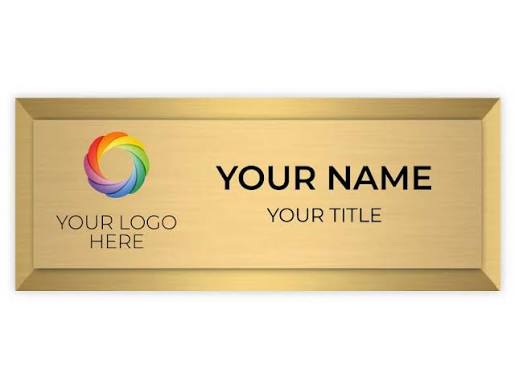
Metal badges, typically brushed aluminium or brass-finished, tend to suit upscale hospitality and corporate environments where a more premium look matters. Acrylic or plastic badges are a more economical option and work well for retail chains or events needing badges in bulk. Fastening choice is worth thinking through as well, magnetic backings avoid the small pin holes that damage uniform fabric over time, while pin backs remain the simplest and most secure option for daily wear.
Businesses comparing finishes and fastenings can review the current Name Badges range, which usually spans both economical acrylic options and more premium metal finishes suited to different budgets and industries.
Design Choices That Actually Help
Legibility should come before styling. A badge with an elegant but thin, low-contrast font might look sophisticated up close but becomes useless the moment someone tries to read it from a few steps away, which somewhat defeats the point. Bold, high-contrast text, along with a reasonably sized font, tends to serve the badge’s actual function far better than an overly minimalist design.
Including a role or department alongside the name, such as ‘Front Desk’ or ‘Customer Care’, can be genuinely useful in larger organisations, helping customers know who to approach for what, without needing to interrupt someone in the middle of an unrelated task.
Batch Ordering for Larger Teams
Hotels, hospitals, and retail chains with high staff turnover face a particular challenge: badges need to be reordered regularly as new employees join. Setting up a standing arrangement with a supplier who can turn around individual badges quickly, rather than requiring a large minimum order each time, tends to save both time and unnecessary expense over a year of staff changes.
For businesses in the UAE managing staff identification across multiple branches or departments, it’s worth reviewing the Name Badges catalogue and confirming reorder turnaround before committing to a single supplier, since consistency in badge style across a large team matters as much as the initial design.
It’s a small item, easy to overlook when planning a broader branding or uniform strategy, but for the people who actually interact with your customers every day, it’s often the first and most direct piece of identity a company presents.
Keeping the Programme Consistent Over Time
A badge system only works as well as its consistency. If half the staff on a shift are wearing a clean, legible badge and the rest have lost theirs or are wearing an outdated design, the intended effect largely disappears. Building a simple internal process, replacing lost or worn badges promptly, updating designs when a rebrand happens, keeping a small buffer stock on hand, tends to matter more in practice than the initial design decisions themselves.
Treated properly, a name badge programme is a low-cost, low-effort way to make an entire customer-facing team look considerably more professional and approachable, and it’s one of the few branding investments that pays off in every single customer interaction, not just at a single event or campaign.