
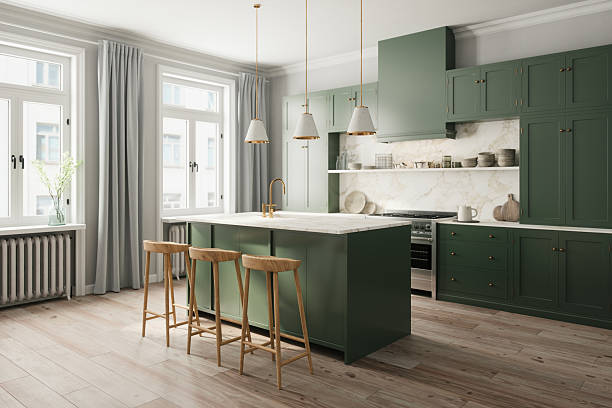

Finishing a kitchen involves more than installing attractive materials in the right general area. Countertops, backsplash tile, trim, paint, outlets, and cabinet details all meet along tight lines where small mistakes become easy to notice. Skilled kitchen remodelers in Huntsville AL coordinate these stages carefully so each surface fits cleanly and later work does not damage what was already completed.
Confirm Cabinet Layout Before Countertop Templating
Base cabinets must be fully installed, leveled, and secured before countertop measurements begin. Fabricators use the finished cabinet positions to record wall angles, appliance openings, sink locations, overhangs, and seam placement. Experienced remodeling contractors check the entire cabinet run first because even a small adjustment after templating can affect how the countertop fits.
Accurate cabinet placement also protects backsplash planning. Upper and lower cabinets establish the visible boundaries that tile installers must follow around windows, range hoods, and appliance openings. Homeowners searching for a kitchen remodel near me benefit when those relationships are reviewed before expensive materials enter fabrication.
Schedule Countertop Fabrication After Base Cabinets Are Set
Countertop fabrication usually begins only after a template captures the real conditions of the room. Walls may bow slightly, corners may sit out of square, and finished cabinet positions can differ from early drawings. Professional home renovation contractors in Huntsville AL allow the fabricator to measure those conditions directly rather than relying on preliminary dimensions.
Production time also affects the rest of the schedule. Stone or engineered surfaces may need cutting, edge finishing, sink preparation, and seam work before delivery. Organized Huntsville general contractors use that fabrication window to prepare other areas without rushing tile installation before the counters are ready.
Match Backsplash Layout to Countertop Seams and Outlets
Tile patterns look better when installers plan them around the full wall instead of starting at one corner and hoping everything lines up. Countertop seams, cabinet edges, outlet boxes, windows, and range openings can influence where cuts should fall. Careful kitchen remodelers map these reference points before setting the first tile.
Outlet placement deserves close attention because small shifts can create awkward slivers of tile or uneven cover plates. Electrical boxes may also need extensions once the finished backsplash thickness is known. Reliable contractors near me coordinate the electrician and tile crew so devices sit flush with the completed surface.
Protect Finished Surfaces During Tile and Trim Installation
Fresh countertops can be scratched by tools, tile spacers, grout buckets, or dropped trim pieces. Protective coverings help shield polished surfaces while backsplash and finish work continues above them. Qualified remodeling contractors in Huntsville AL also keep cutting stations away from installed cabinetry to reduce dust and accidental damage.
Cabinet doors and appliance fronts need similar care. Adhesive, grout haze, paint, and caulk can stain or mark finished surfaces if crews work without protection. Thoughtful kitchen remodelers use barriers and cleanup routines that keep one trade from creating repair work for another.
Coordinate Grout, Caulk, and Edge Profiles Across Finishes
Grout handles joints between tiles, while flexible caulk belongs where different surfaces meet and movement can occur. Countertop-to-backsplash transitions, inside corners, and areas around certain fixtures often need flexible material rather than rigid grout. Experienced home renovation contractors understand these differences and make sure each joint receives the right treatment.
Edge profiles also influence how the materials meet visually. A thick countertop edge, pencil tile, metal trim, or exposed tile edge can change the appearance of a corner. Skilled kitchen remodelers in Huntsville AL review those details before installation so transitions look intentional instead of improvised at the end.
Complete Paint Touch-Ups After Countertop and Tile Work
Painting too early can lead to repeated repairs around the backsplash, countertop edges, and cabinet trim. Tile cutting, adhesive, caulking, and countertop installation may leave small marks that need correction once the heavy work is complete. Experienced remodeling contractors schedule final touch-ups after these stages so painters can address the actual finished conditions.
Color matching matters around repaired wall areas and newly installed trim. Primer may be needed where drywall was patched, especially after electrical adjustments or backsplash preparation. Established Huntsville general contractors keep paint information available so touch-ups blend with surrounding walls rather than leaving visible patches.
Inspect Finish Transitions Before Final Kitchen Handover
Final inspection should focus on the places where materials meet because those junctions often reveal the quality of the overall installation. Countertop seams, backsplash edges, cabinet fillers, outlet covers, caulk lines, and trim joints should appear straight, secure, and clean. Careful kitchen remodelers also check for chipped tile, loose grout, uneven silicone, or gaps that could collect moisture.
Lighting can expose finish problems that remain hidden during construction. Under-cabinet fixtures may reveal uneven tile lines, shadowed caulk joints, or surface irregularities along the counter. Hoover General Contractors can help coordinate countertop, backsplash, paint, trim, and finish work during residential or commercial kitchen remodeling so each stage supports the next and the completed space feels polished rather than pieced together.